Spotlighting Trench Knives with Brass Knuckles: One of WW1’s Most Iconic Innovations
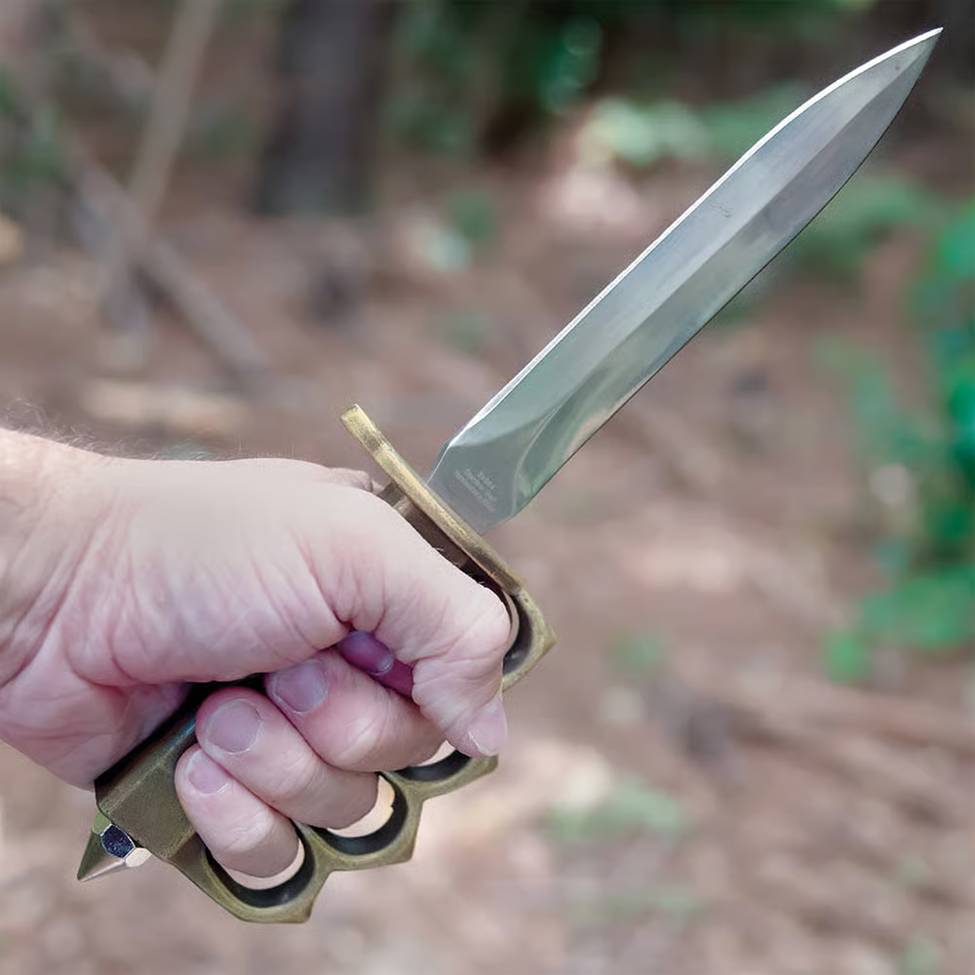
In the First World War, soldiers at the fronts were often issued bolt-action rifles equipped with sword-pattern bayonets. One need only look to the M1905 of the Americans, the Seitengewehr 98 of the Germans, or the pattern 1907 of the British to see an illustration of this. The benefit of the sword-pattern bayonet is that it afforded a soldier extra reach and therefore an advantage against an opponent that was slightly further away, considering the (relatively) slow rate of fire of bolt-action repeaters as compared to the autoloaders that would eventually replace them. But, as you may also know, fighting in World War 1, especially along the Western Front, almost immediately devolved into protracted trench warfare, rendering that relative advantage of a sword bayonet not just moot, but a detriment. Indeed, in the tight, even crenellated confines of trenches, a rifle equipped with a sword bayonet was in fact much less practical than a trench shovel, a club, or a knife.
As a result, though soldiers from American, Commonwealth Forces and Imperial Germany may have been issued rifles with sword bayonets, it was hardly long before they started improvising their own trench weapons, many of which proved indeed more effective in close-quarters combat, especially during night raids where not just close reach was essential, silence was. That being the case, the First World War saw a relatively rapid proliferation of improvised melee weapons that were used in trenches, especially along the Western Front. One of the most enduring among these designs, particularly for its gruesome form, is what is popularly known as a knuckle duster.
These are effectively trench knives with brass knuckles. Here’s what you know.
Enter Trench Knives with Brass Knuckles
Believe it or not, a knife actually offers some serious advantages over a rifle in combat, especially in close quarters, and especially when discretion is advisable. As Arthur Guy Empey noted in his 1917 work, Over The Top, “The real work in the fire trenches commences at sundown.” This is a first-hand testament that the cover of night allowed for certain operations that would have been too hazardous to be practical under the light of day. For instance, night raids, which would be conducted to gather intelligence, required the cover of darkness. Stealth was the advantage here, and trench knives with brass knuckles integrated into the design worked much better during such encounters than did a rifle or a handgun. Trench knives are silent and offer no report to betray a position or operation to an enemy. That alone is a considerable advantage.
Another is that the smaller, more compact form of trench knives with brass knuckles was more practical in a trench than was a rifle with a sword bayonet fixed. Sharpened on both edges, such trench knives could be used not just as push daggers but also for slashing attacks. Plus, the compact nature of a trench knife that could be so used also gave it considerable advantages over other melee weapons like clubs and trench shovels, which still required a good deal of space for a swing about the weapon to deliver an effective strike. A trench knife can be used effectively with 6 inches or less of clearance. Grappling with an enemy therefore made a trench knife, however small, a much more lethal weapon than a club, a trench shovel, or any other implement that required a radius for an effective swing to land a blow.
However, trench knives with brass knuckles did not altogether forgo this flexibility, as is evident from their design. Not just a blade, but also a set of brass knuckles, they could be used to deliver cripplingly effective blows at close ranges, and again, more effectively, though perhaps with less power, than a club or other similar weapon. In addition to the fact that the brass knuckles integrated into the design of these trench knives could deal devastating injuries, it is also true that they were defensive as much as offensive. The brass knuckles not only concentrated the area of a user’s blow, but protected his knuckles against it, reducing the likelihood of injury in the event of an altercation.
One other advantage of the design, albeit a tangential one, is that a user could theoretically wear brass knuckles and still operate a handgun. Though it would be a clumsy presentation, it would technically still work; the brass knuckles could be worn and forgotten about until needed. It is also the case that many of these trench knives were made with a sharpened or pointed pommel that could be used to deadly percussive effect when struck against an opponent’s head, or a bone. These features created concentrated pressure points that, even with the administration of only a little force, could create devastatingly effective injuries.
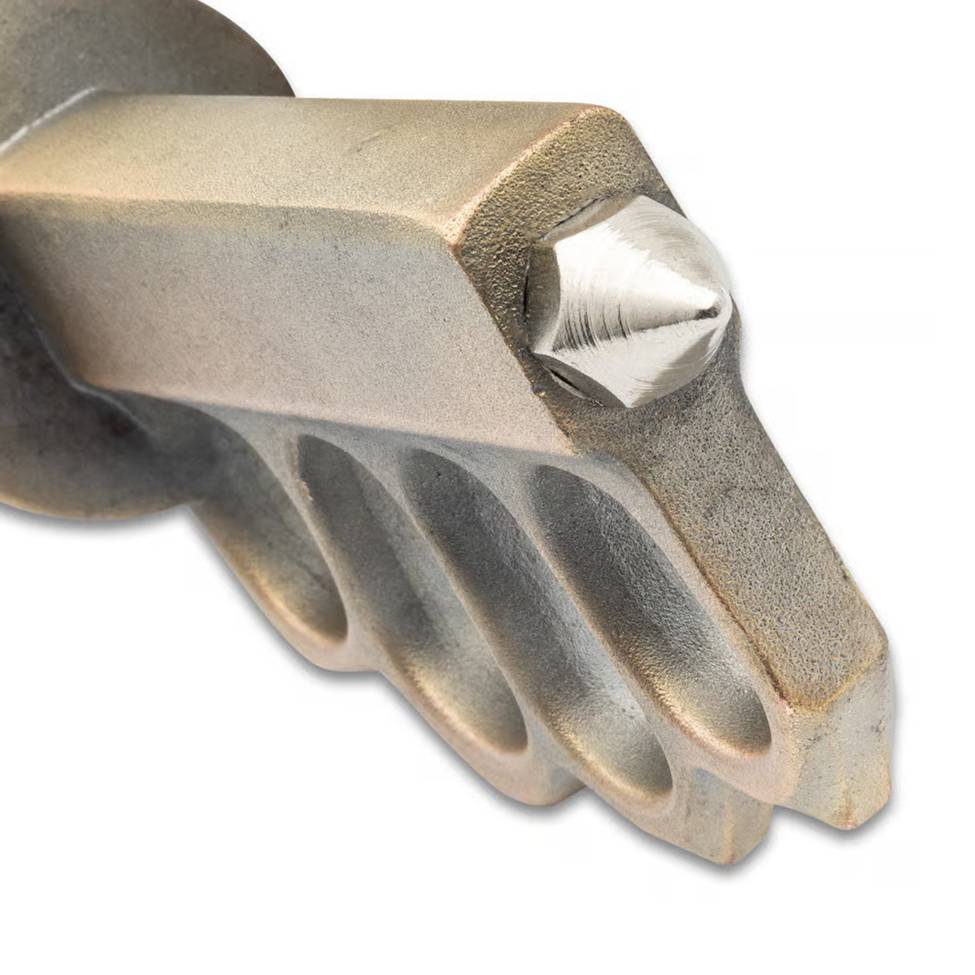
In this respect, trench knives with brass knuckles, though they may not have been the most widespread of the melee weapons that were used in combat in the First World War, still sported a highly effective design against an adversary in cramped spaces. In short, numerous features of the design were well-suited to close-quarters engagements, and preserved the discretion and to a degree, the secrecy of the assailant. All in all, it wasn’t long before official forces caught onto the ingenuity of the design, and models like the M1917 trench knife were developed and actually issued to soldiers. In whatever case, the basic profile of this trench knife with brass knuckles integrated into the design is irremovable from the mind contemplating the weaponry of World War One.
Add to Your Collection Today
Looking for a replica trench knife with brass knuckles to add to your collection? On the hunt for an M1917 trench knife replica? We carry plenty of examples of reproduction WW1 melee weaponry in our collection. Get a closer look at our catalog (which has tons of cool stuff, for lack of a better qualifier) and get in touch with us if you have any questions about anything before you buy.