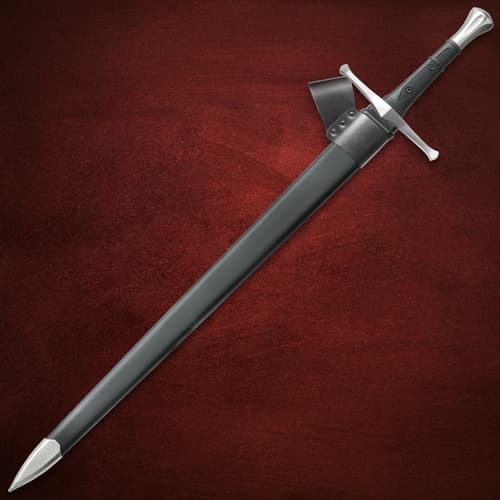
Caring for a Bayonet
Caring for a Bayonet
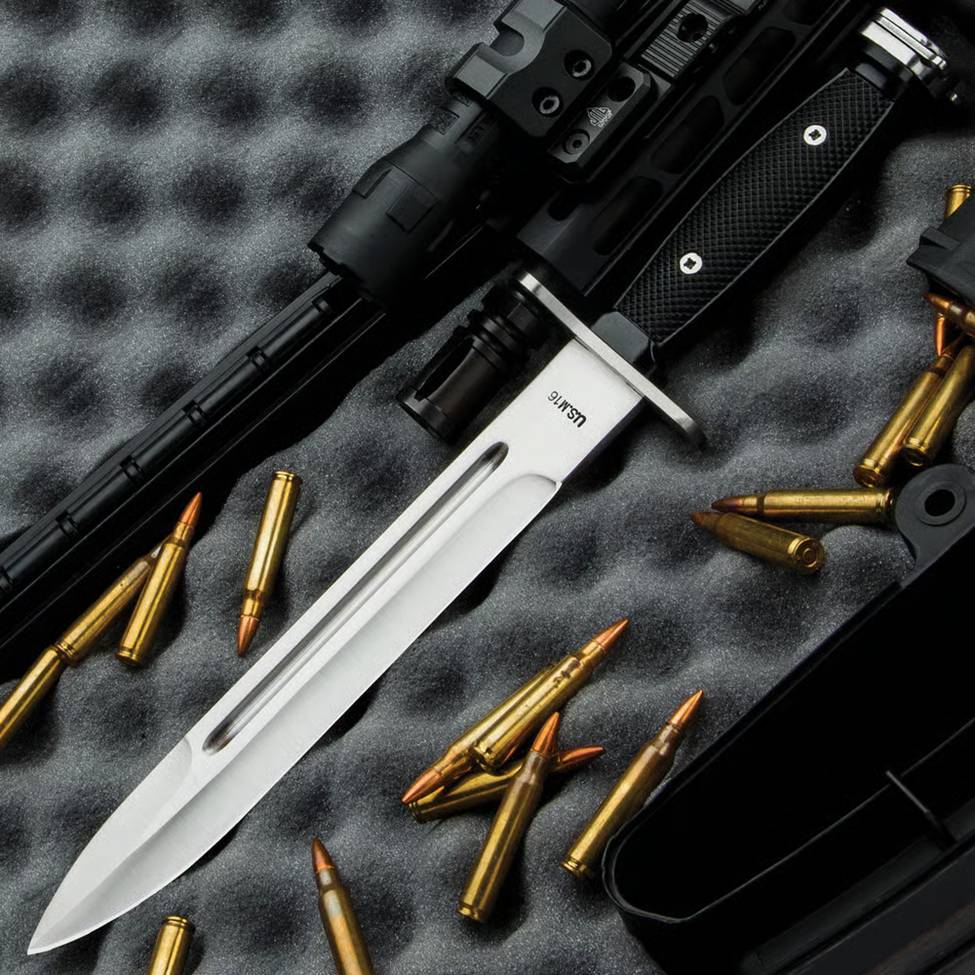
Whether or not your bayonet is displayed in a collection, used in the field as a utility knife just because it’s cool, or actually mounted to your AR or Garand is up to you. What doesn’t change is how to care for it. Fortunately, bayonet care is basically the same as general knife care. Here’s what you should know.
Handle Scale Care
First, let’s talk about how to clean and care for bayonet scales. The first thing you need to do is identify the scale material. Some bayonets and bayonet replicas are made with wood, others are made with synthetics like phenolic resin. The synthetics are a bit easier to care for. Simply wipe them off with a clean cloth. You can use water and a mild detergent like dish soap for a deeper cleaning if you like as this won’t hurt the material. If there’s grime in the checkering or texture of synthetic scales, you can use a nylon brush to get it off if you like.
Then rinse and dry the scales. If the scales are wood, as some bayonets are made with wood scales, you’ll want to follow the same protocol. Wipe off with a clean rag and use some warm water and a mild detergent if necessary. However, wood scales should be waxed or oiled with a wood-safe treatment periodically, as wood, unlike synthetics, can dry out, warp or crack if not properly conditioned, especially if the bayonet is very old.
Bayonet Sheath Care
Caring for a bayonet sheath is relatively straightforward, as most are synthetic or made of a metal alloy. For synthetic or metal alloy sheaths, just wipe them down with a clean cloth. Water and mild detergent like dish soap can be used here too, as can a nylon brush, to dislodge any dirt or grime that is present. If the sheath is a metal alloy and you used dish soap, you will want to make sure you apply some oil when you are done so that it doesn’t rust. If, however, the sheath or scabbard is made of leather, make sure you brush it off to remove any soil from the surface, then condition it with an appropriate leather conditioner. You can use a commercial product or something like neatsfoot oil which is commonly used to condition leather. This step is critical for leather sheaths specifically because leather will become dry and brittle and crack as it ages if it is not properly conditioned.
Blade Care
Caring for the blade, appropriately, is the most important step in bayonet maintenance. What the steel alloy is made from is important here. If you have a non-stainless alloy, and there is light rust on the blade, you may be able to dislodge it with some fine steel wool. Be careful of the edge when polishing the blade. If the blade is simply dirty, use a clean, dry, microfiber rag to wipe it off, once more being cautious of the edge. For grease, grime, and other deposits, you may want to use warm to hot water and a mild detergent to scrub them away. A nylon brush can also be used here, as can a brass brush as it will offer more scrubbing power without damaging the steel or its finish, since brass is a softer metal than steel. Pay particular attention to the fuller of the blade, as well as to any tight areas area the shoulder where it meets the handle. These are areas in which dirt, grime and other soils will tend to accumulate. The blade of your bayonet should also be protected from rust once clean, whether it is stainless or not. A drop or two of knife or gun oil on each side of the blade, evenly distributed with a clean cloth, should take care of that.
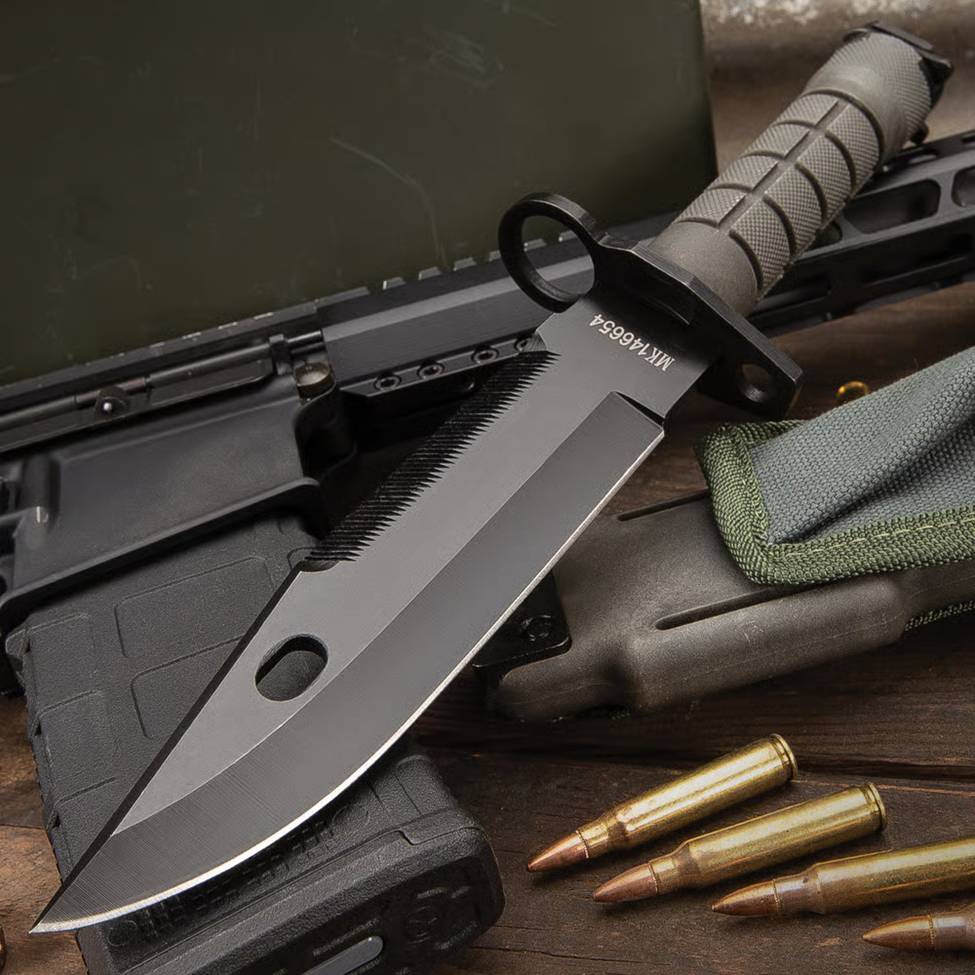
Bayonet Storage
The final element of bayonet care is how you store it, where you store it, and under what conditions. Whether you have your bayonet displayed or you just keep it sheathed when you’re not using it, the most important thing to remember here is to keep the conditions cool and dry. Temperature is not as important as humidity, but you want it to be very dry. At minimum it should be below 50% relative humidity, but it’s better if you can keep it below 30%. This will help prevent rust on the blade, as will the coat of oil you applied while cleaning. It is also advisable not to store or display your bayonet, or its sheath, anywhere in which it will be subjected to direct sunlight, as the UV in sunlight will damage the wood or synthetic scales, and can damage the sheath if it is plastic or leather. Another note is that, if you are storing the bayonet in question for a prolonged period of time, you should store it outside of its sheath or scabbard. The sheath can trap moisture next to the blade, which can cause rust if you don’t catch it on time. One additional consideration for those that keep their bayonets in storage or on display for prolonged periods of time is that it might be better to apply microcrystalline wax to the blade, rather than oil. Microcrystalline wax is harder, drier, and does not evaporate in the same way that oil does, so it protects the blade for longer. It can also be applied to the scales if they are wood. Also, if you have a historically significant bayonet or a collectible, consider handling it only with white inspection gloves that will protect it from the oils in your skin if for any reason you ever do handle it or show it off to your company. Otherwise, the most important notes are to keep the handle, sheath and blade clean and dry, and to store them somewhere cool and dry.
Shop Bayonets Here
Ready for a new bayonet or replica for your collection? Check out our catalog which contains M7 and M9 bayonets as well as replicas of US Model 1905, Japanese Arisaka Model 30, and other historically significant patterns. Also, if you have any questions call us and we will be happy to assist.