Rapier Terms and Techniques
Rapier Terms and Techniques
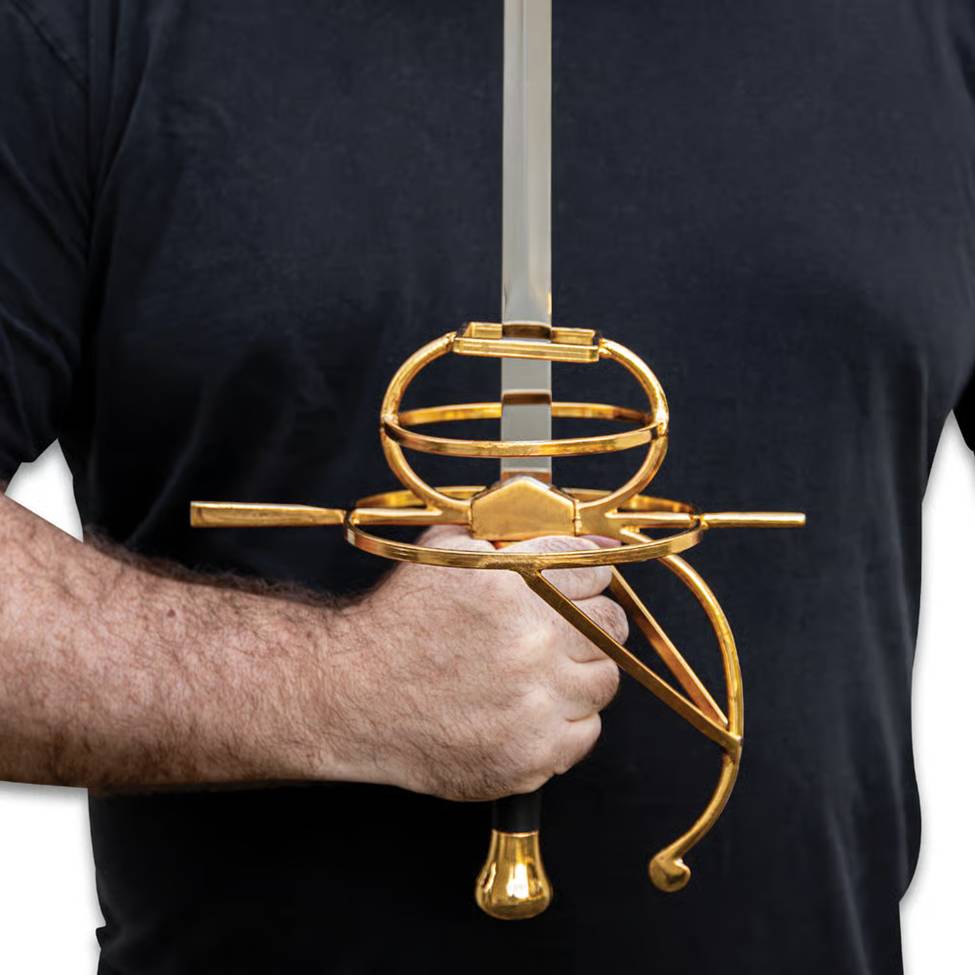
Swordplay with a rapier is quite distinct from that of other weapons like greatswords, which rely more heavily on mass and power than they do on technique; the rapier is also a long, thin sword that is better adapted to thrusting and lunging attacks than to slashing techniques. This short post will break down some of the major terms and techniques used in rapier fencing, taken from Ridolfo Capo Ferro, an Italian fencing master who is still highly respected among practitioners of historical European martial arts, and specifically among those that fence with a rapier, and who in 1610 published a treatise on the art of fencing with a rapier.
The Rapier Itself
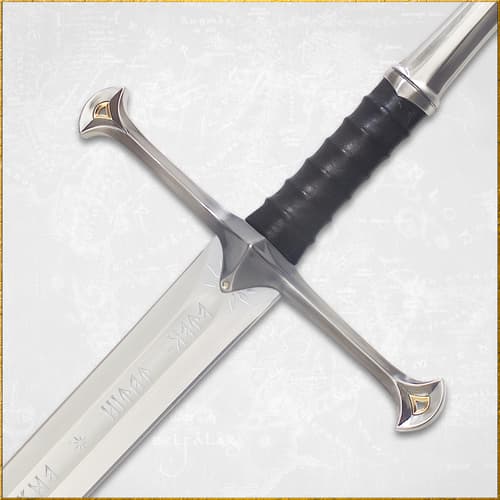
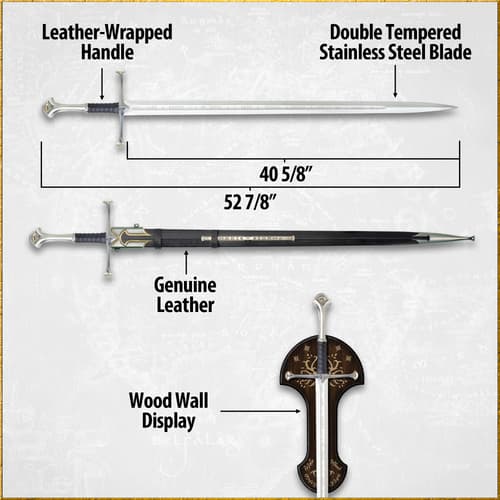
The rapier is a one handed sword, descended from the Spanish espada ropera, or dress sword, from which it takes its name. The blade is long, thin and double-edged, with a needle point, and the blade length is generally between 39 and 45 inches in length. The rapier also offers comprehensive protection for the wielder’s hand, and usually has a swept hilt, a cup hilt, or a full basket hilt that fully encloses the grip, protecting the hand. The blade is further broken down into two main segments, the “strong” and the “weak” of the blade; the strong consists of the portion of the blade from the hilt about halfway to the tip, and may be sharpened or unsharpened; the weak consists of the blade from the end of the strong, at the halfway point, through the tip. It is always sharpened. According to Capo Ferro, the weak of the blade is used to attack an opponent whereas the strong is reserved almost entirely for defensive maneuvers, which is why it is acceptable for that segment of the blade to remain unsharpened.
Holding the Rapier and Stances
In traditional rapier fencing, a right-handed wielder holds the rapier in the right hand, with the thumb against the crossguard and the pommel snug against the wrist. He will stand in profile to his opponent so as to minimize the size of the target he presents, with his left foot in the rear and his right foot forward, with most of his weight on his left leg. There are four main stances, or guards, also known as positions, that are used in the traditional rapier fencing martial arts, according to Capo Ferro. These are called the prima (or first), seconda (second), terza (third), and quarta (or fourth). In the prima position, you hold the rapier so that the knuckle guard, if there is one, is facing away from the body, with the rapier raised above the right shoulder at the 12 o’clock position, with the point facing inward, and slightly down.
In the seconda position, you bring down the rapier from the prima so that the sword is level with your shoulder and at the 3 o’clock position, and is no longer overhead. The point of the rapier should still be facing inward and towards your opponent. In the terza position, the knuckle guard should be facing down towards the ground; the hilt should be at about the level of your hip, with the point facing your opponent, and the blade angled slightly upward. Though this is called the third position, is it the most basic and straightforward, and one that serves the most practical guard in most situations. The terza is also the only position that is considered the guard in that it is intended to put the wielder in the most advantageous position to parry a blow or stringer his opponent’s sword (see below). Lastly, in the quarta, rotate the rapier so that the knuckle guard is at the 9 o’clock position, away from the body, with the sword raised slightly from the terza position.
Attacks
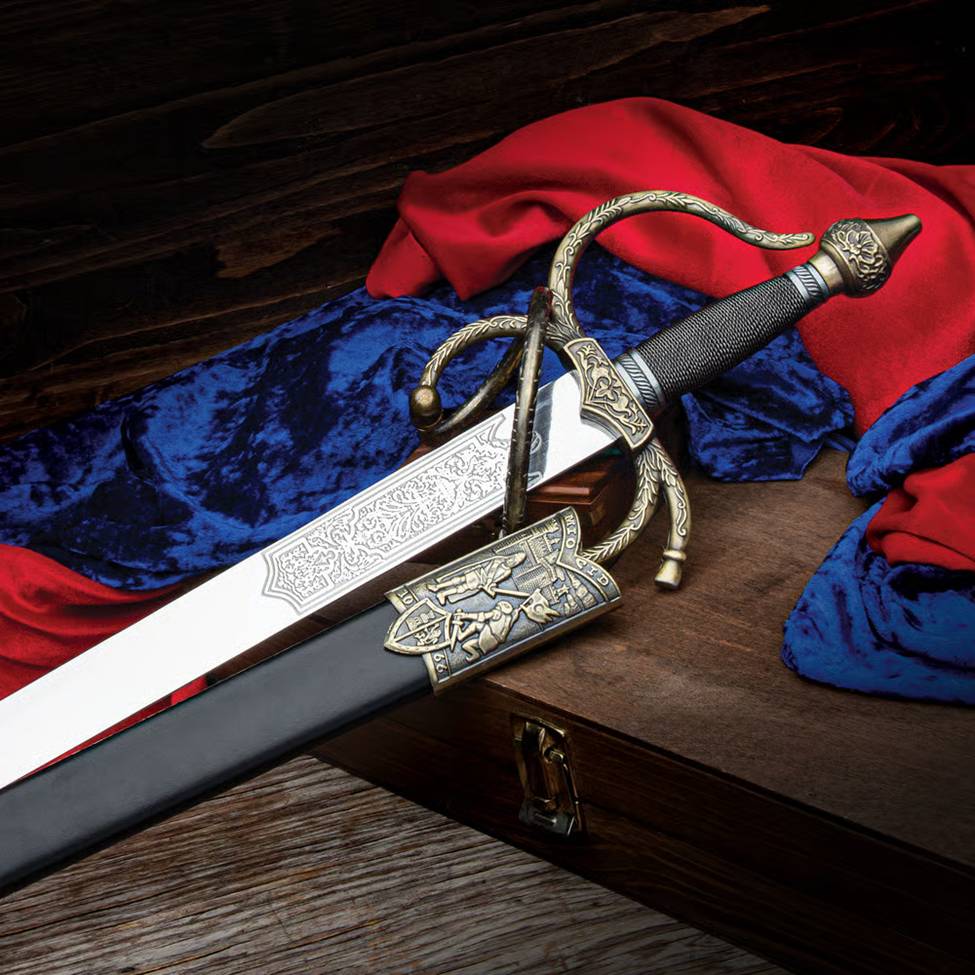
Rapier swords are designed to offer primarily thrusting and lunging attacks, but basic cutting maneuvers will also be covered here. Cuts, or slashes, are rarely employed when fencing with a rapier, except in the Bolognese school. Most are delivered with the true edge of the sword, rather than the false, or back edge. Cuts are made from above, or from the right or left at a diagonal.
Primarily, rapiers are used for thrusting and lunging attacks. The basic thrust is a maneuver in which the wielder extends the arm holding the weapon with the point towards the opponent, reaching toward the right side of their body. Targeting the left side of an opponent’s body is generally ineffective as it will be too far away to reach. A thrust can be extended by leaning forward with the upper half of the body, by stepping forward with the right foot, or extended into a lunge, in which the wielder’s entire upper body “lunges” forward to strike, hence the name. A lunge is a powerful move but must be made carefully to avoid a counterattack because it brings the entire body closer to the opponent.
Stringering
Defensive play in rapier fencing is based largely on a concept called stringering, which effectively means parrying the opponent’s blade before they have had a chance to strike; or, in other words, positioning your blade so that the opponent cannot thrust or lunge in a straight line towards your body. The most basic way to communicate the idea of stringering is that you want to position the strong of your blade over an opponent’s weak; this action prevents them from taking the appropriate maneuver to thrust or lunge at you. It also gives the wielder the ability to turn the point back away from its position, with the true edge still against the opponent’s blade, so that the point may be used to execute a thrust or lunge.
Explore a Broad Catalog of Rapiers and Other Swords Here
This is just to serve as a primer to medieval European swordplay. For more information, look into Ridolfo Capo Ferro’s 1610 manual, Great Representation of the Art and Use of Fencing, which is in the public domain and available for free online. You can also get in touch with a local Historical European Martial Arts guild. Otherwise, take a look through our catalog of rapiers and other swords and see if there’s anything that interests you - and if you have any questions get in touch with us directly.