Sighting in a Crossbow
Sighting in a Crossbow
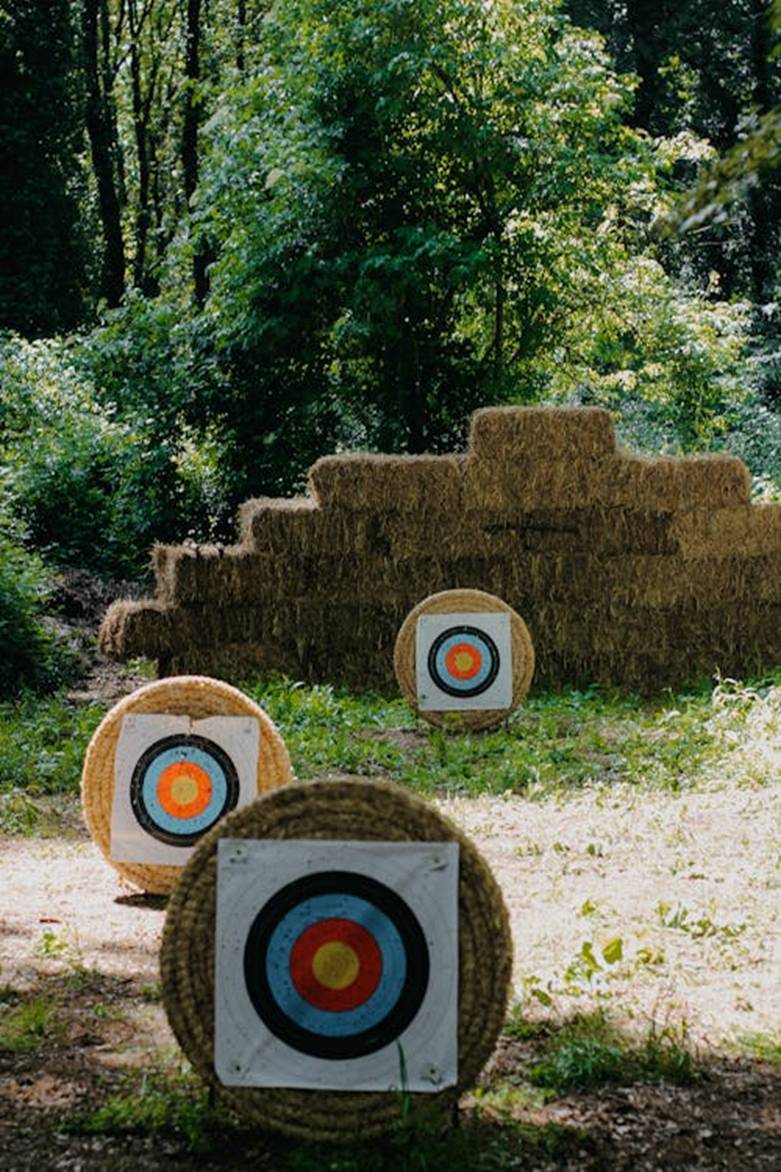
Fundamentally, sighting in a crossbow, regardless of whether or not it’s a recurve or a compound crossbow, is a relatively straightforward process that is the same as sighting in a rifle or any other firearm. This short post will take you through the steps.
Important Note: Start with a Stable Rest and Sight in with the Same Bolts
First, there are a few important preliminary notes that you need to observe before you actually sight in the crossbow. You will need between 3 and 5 bolts. They should be identical in length, weight, stiffness, and they should all have the exact same field points. You cannot sight in a crossbow accurately with a mishmosh of bolts. And even if you use the same bolts, different field points will make a bolt fly differently, so remember that. Also remember that once your bow is sighted in, it will only be sighted in with the bolts you used. Different bolts, as stated, will fly differently. You also need a stable rest that is perfectly secure. You cannot move the bow after shooting and before adjusting the sights, so you need to make sure your shooting rest is perfectly still. You also need to sight-in at a specific range. Anywhere from 10 to 30 yards is a good place to start. Other than that, here’s what you need to know.
With Iron Sights
Sighting with irons is a fairly basic process but it is different from the process you would follow with an optic. The first thing you will need to do is set up your rest, then cock your crossbow and set it in the rest. Choose a spot on your target, take aim over your iron sights, and release a bolt. Without moving the crossbow at all, keep your eyes over the sights and see where the bolt struck the target. Most crossbows, like most firearms, have a fixed front sight. Therefore you need to make adjustments only to the rear sight. You also need to remember that when adjusting the rear sight, you need to move the sight in the opposite apparent direction from where the bolt landed. Therefore, if the bolt landed high, you need to lower your rear sight. If it landed low, you need to adjust the rear sight’s elevation to raise the rear sight. Similarly, if the bolt flew to the left, you need to move your rear sight to the right, and vice-versa.
With the bow stationary in the rest, adjust the rear sight so that when you are looking over the sights, it appears that the sights have been brought in line with where the bolt landed. Now you can remove the crossbow, cock it and place a new bolt on the rail. Replace it in the rest, take sight at another spot on the target (you don’t want to shoot the nock off your other bolt) and fire. If you made effective adjustments, the point of impact (where the bolt landed) should now be more closely aligned with the point of aim, that is, where your sights were pointed. If not, repeat the process and move your rear sight in the opposite apparent direction of the point of impact to bring it in line, then fire another bolt. Repeat this process until you are producing satisfactory groups with your crossbow at the range you have chosen.
With a Scope or Red Dot
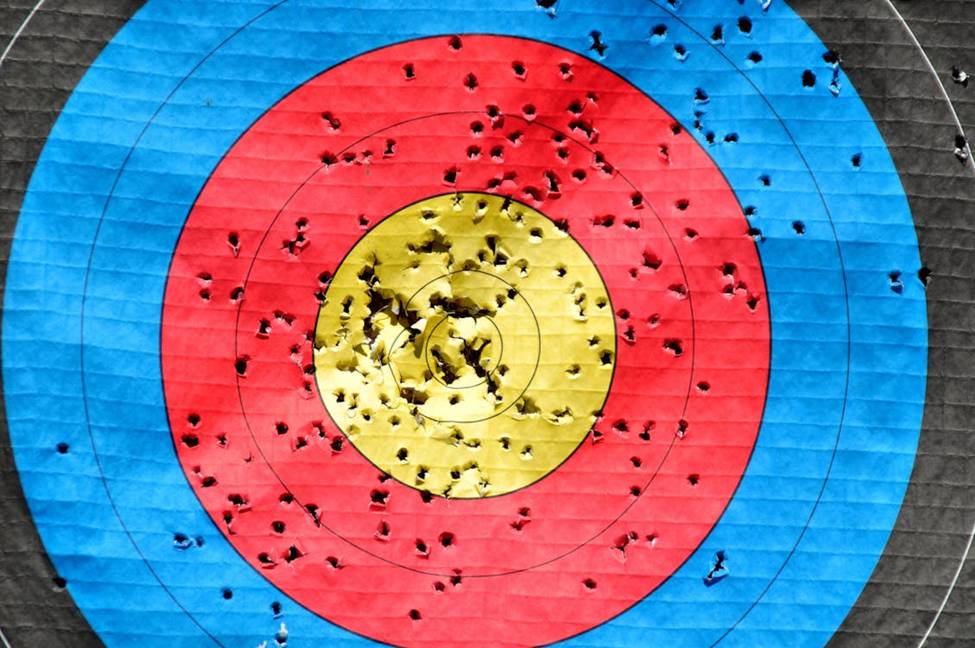
The process for sighting in a crossbow with a scope or a red dot sight is fundamentally the same as it is with iron sights, with one important difference in how you adjust the reticle. Cock your crossbow, set a bolt, and place it in the shooting rest. Choose a spot on the target, then fire. Without moving the crossbow at all, take note of where the bolt landed. Now what you need to do is adjust the windage and elevation of the scope’s reticle (or the red dot of the sight itself) so that the reticle (or dot) covers the nock of the bolt. Doing so will bring the scope or red dot sight’s point of aim into closer alignment with the point of impact, where the bolt actually landed. It should only take a few bolts to get the crossbow sighted in, and once you are done you can test fire a few more bolts to ensure that the outfit is firing accurately at the range you have chosen.
Now Your Crossbow Is Field-Ready
With your crossbow sighted in, you can now choose to continue sighting in at a greater range, or to begin target shooting, competing or hunting with it. Remember that bolts will drop beyond the range at which you sighted in, which will affect overall performance. Be aware of bolt drop when you take your bow in the range. Otherwise, you’re now ready to pursue your sport.