What Makes a Sword a Rapier?
What Makes a Sword a Rapier?
A rapier is one of the most recognizable swords in European history, famed not for battlefield dominance but for its role in duels, civilian defense, and the culture of Renaissance Europe. While many people today confuse fencing foils or smallswords with rapiers, the rapier is a distinct weapon with its own physical identity and a style of fighting unlike any other sword of its era.
The Physical Qualities of a Rapier
The rapier is defined first and foremost by its blade. Long, narrow, and optimized for thrusting, the blade sacrifices some cutting power in exchange for speed, accuracy, and reach. Unlike the broad arming swords and sabers used on the battlefield, a rapier’s blade is usually between 38 and 45 inches, built to pierce rather than hew. Its geometry favors rigidity, allowing the wielder to drive the tip into an opponent with precision. Some examples retain sharpened edges, but the cut was secondary; its essence was the thrust.
Hilt and Hand Protection
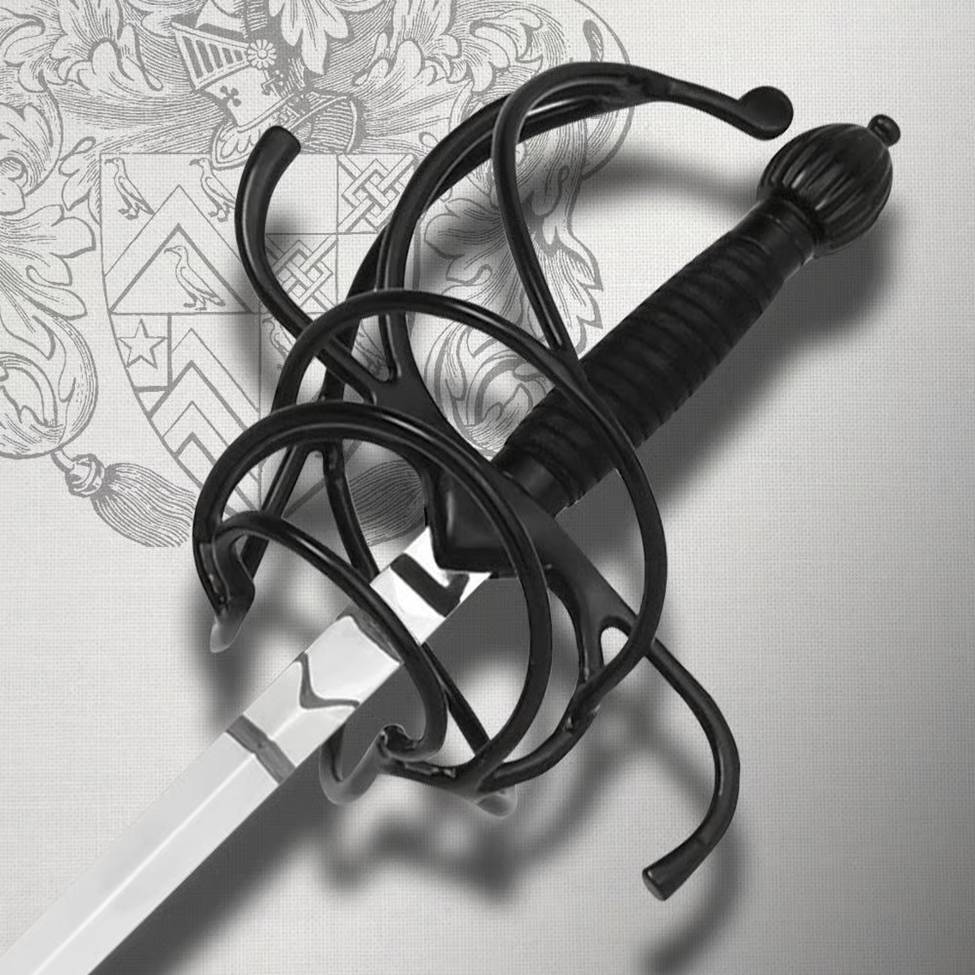
Just as important as the blade is the hilt. Rapiers feature some of the most elaborate and complex guards of any European sword. From swept hilts of interlacing bars to ornate cup hilts, the design’s purpose was twofold: to shield the unarmored hand during a duel and to balance the length of the blade. The finger rings, knuckle guards, and counterguards gave the wielder greater control and leverage, enabling fine manipulation of the point. The hilt’s artistry also reflected status. Many rapiers doubled as fashion statements for gentlemen who wore them daily.
Weight and Balance
Despite their length, rapiers are surprisingly light, often weighing between 2.5 and 3.5 pounds. The balance point lies close to the hilt, giving the sword remarkable agility. This balance supports a fencing style that relies on subtle movements of the wrist and arm rather than heavy swings.
Civilian vs. Military Context
Perhaps the most telling quality of the rapier is its context. Unlike broadswords or sabers carried to war, the rapier was primarily a civilian sidearm. Worn with everyday clothing, it served as both a mark of social standing and a means of self-defense.
This distinction between battlefield swords and civilian swords marks the rapier as a new development in the 16th century.
This distinction between battlefield swords and civilian swords marks the rapier as a new development in the 16th century.
The Unique Fighting Style of the Rapier
The Thrust as Primary Attack
Where medieval swords balanced cut and thrust, the rapier narrowed the focus almost entirely to the point. The long blade, combined with its excellent control, made thrusting the natural mode of attack. Manuals of the 16th and 17th centuries emphasize straight-line lunges, disengages, and binds. All techniques designed to bring the tip to bear against the opponent’s vital targets with speed and precision.
Reach and Control
The rapier’s reach gave its wielder an immediate advantage in single combat. By keeping an opponent at the tip of the blade, the fencer could threaten without committing. The sword’s narrow blade also allowed for quick disengagements, slipping around defenses to find an opening. This reach-based strategy meant that rapier combat often resembled a chess match: cautious, deliberate, and full of feints designed to provoke mistakes.
Defensive Techniques
Contrary to popular imagination, rapier fighting was not purely offensive. Its intricate hilt allowed fencers to parry and deflect with confidence. Historical sources also describe the rapier being paired with off-hand weapons, such as a dagger, cloak, or buckler, to create layered defenses. Success with the rapier was as much about denying the opponent’s attack as it was about landing one’s own thrust.
The Civilian Dueling Culture
What truly distinguishes the rapier’s style is its connection to dueling. In Renaissance Europe, disputes of honor were often settled blade to blade, and the rapier was the weapon of choice. Unlike battlefield swords, which had to break armor or cut from horseback, the rapier was built for one-on-one encounters in civilian clothing. This environment shaped its style: precise, technical, and concerned with personal survival rather than mass combat.
The Rapier’s Legacy
The rapier represents more than just a sword; it embodies the cultural shift of Renaissance Europe. It was the first sword designed for civilian wear, reflecting an age where personal honor and public image were tied together. Its design emphasized elegance and sophistication, with ornate hilts and slender blades that symbolized refinement. The fighting style it produced, centered on precision and thrusting, laid the groundwork for modern fencing. Even today, replicas of rapiers capture the imagination, whether as historical reproductions or as fantasy-inspired creations. From ornate golden-hilted pieces to replicas of famous fictional swords like Arya Stark’s Needle, the rapier’s image remains a symbol of grace and precision.
BudK Offers Rapiers from History and Pop Culture
A rapier is a distinct weapon marked by its slender thrusting blade, protective and ornate hilt, and unique role as a civilian sidearm. We offer rapiers that bridge utility and artistry, practicality and elegance, and influence that continues into both fencing halls and popular culture today. Explore our various swords now and find the rapier that fits your sword collection!