Why a Lock Pick Set is Incredibly Useful (and How to Use It Like an Expert)
Why a Lock Pick Set is Incredibly Useful (and How to Use It Like an Expert)
Lockpicking is one of those rare skills that feels both practical and thrilling. Whether you're fascinated by the inner workings of locks or simply want the satisfaction of being able to solve a mechanical puzzle with nothing but a few small tools, learning to pick locks is a hobby that pays off in knowledge, confidence, and real-world usefulness. Having a lock pick set isn’t just for spies and secret agents—it’s for tinkerers, security enthusiasts, hobbyists, and anyone who wants to understand how locks work and how to open them ethically and legally. With the right tools, a bit of patience, and a good understanding of mechanics, anyone can learn how to pick locks like an expert.
How a Lock Works
Before you use a lock pick set, it’s essential to understand what’s happening inside a lock. A standard pin tumbler lock—the most common type—works with two rows of pins inside a cylindrical plug. These pins are separated into key pins at the bottom and driver pins at the top. When no key is inserted, the driver pins rest at a position that prevents the plug (the part that turns) from rotating. The magic happens when the correct key is inserted: the grooves, or "bitting," on the key push each key pin to just the right height so that the corresponding driver pin is pushed above the shear line—the dividing line between the plug and the outer casing of the lock. Once all the pins are at this shear line, the plug is free to rotate, unlocking the mechanism. This is the very principle that lockpickers learn to replicate using their tools. Instead of using a key to align the pins, a lockpicker applies gentle rotational pressure with a tension wrench while lifting each pin with a pick until all the pins are set at the shear line.
What’s Inside a Lock Pick Set?
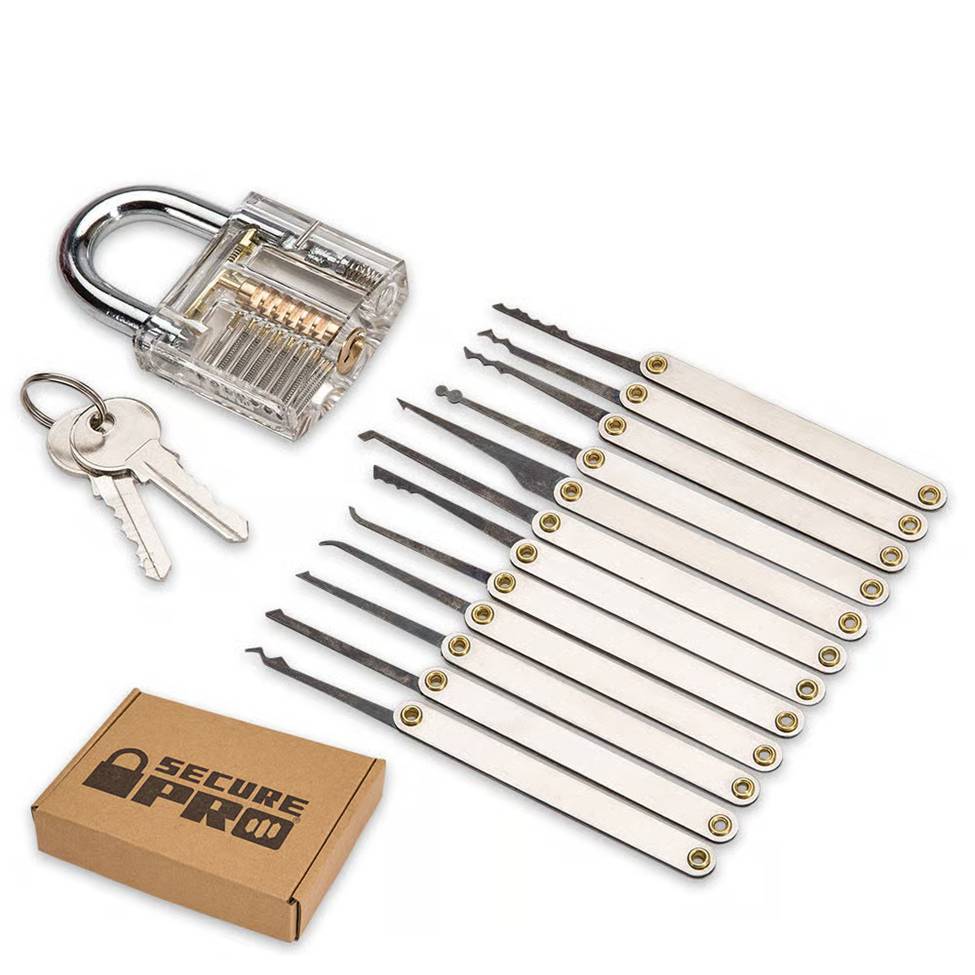
Most beginner lock pick sets contain a handful of essential tools. The key components fall into two categories: turning tools (or tension wrenches) and pick tools. The tension tool is used to apply slight rotational pressure to the lock, mimicking what a key does when you turn it.
This pressure is critical because it causes some of the pins to bind inside the lock, allowing you to lift them one at a time until they "click" into place above the shear line. Pick tools come in a variety of shapes and sizes, each suited to different techniques and lock styles. Common picks include:
- Hooks: Designed to lift individual pins precisely. Great for single pin picking (SPP).
- Rakes: Used to manipulate multiple pins simultaneously. These have jagged edges or bumpy profiles and are excellent for quick attempts on low-security locks.
- Half-diamonds: Versatile tools that can be used both for raking and single pin picking.
- Ball picks (or “snowman” picks): Often used for wafer locks, not pin tumblers.
- Broken key extractors: Specialized tools designed to remove broken keys lodged in locks.
How to Start Picking Locks
The best way to learn lockpicking is to start with a clear practice padlock. These are transparent locks designed specifically for learners. You can observe how the pins move in response to your tools, which accelerates your learning and gives you visual feedback on how the lock reacts. The basic technique begins by inserting the tension wrench and applying light torque—just enough to bind the pins, but not enough to bend the tool. Then, using a pick (usually a rake to begin with), insert it into the keyway and gently jiggle it back and forth while maintaining tension. The goal is to set each pin to the shear line through repeated motions. With practice, you’ll feel and hear the subtle clicks as the pins fall into place. Eventually, the plug will rotate, and the lock will open. This technique is called raking and is generally the easiest way to start. As you progress, you’ll move into single pin picking, which involves using a hook pick to lift each pin individually, a method that requires a keen sense of touch and patience.
Moving Beyond Practice Locks
Once you’re confident with practice locks, the next step is to test your skills on real-world locks that you own and that are not in active use. A good starting point is the Master Lock No. 3. It contains four pins and is known for being beginner-friendly. From there, you can challenge yourself with more complex models, like five or six-pin door locks, which offer tighter tolerances and require more refined technique. As you become more advanced, you’ll learn to identify binding pins, adjust your tension technique, and even use hybrid tools like the half-diamond for more nuanced picking. Eventually, zipping—pushing all the pins up quickly and pulling the pick out rapidly while under tension—will become part of your toolkit. It’s crucial to emphasize: only pick locks that you own and that are not in active use. Lockpicking should always be practiced ethically and legally. Tampering with locks that don’t belong to you or that are used for active security can be illegal and dangerous. Treat lockpicking as the hobby and educational tool it’s meant to be.
Engage Your Mind with a Lock Pick Set from BudK
Owning a lock pick set opens the door—literally and metaphorically—to a fascinating world of mechanical puzzles, problem-solving, and hands-on skill. With the right tools you can find at BudK, anyone can learn to pick locks like an expert. We carry lock picks for anyone who is in it for the challenge, the knowledge, or the pure satisfaction of clicking open your first real lock. It’s a hobby that continues to grow in popularity, but remember: pick responsibly, learn patiently, and enjoy the journey into one of the most intriguing mechanical arts.