Your Guide to Sword Canes
Your Guide to Sword Canes
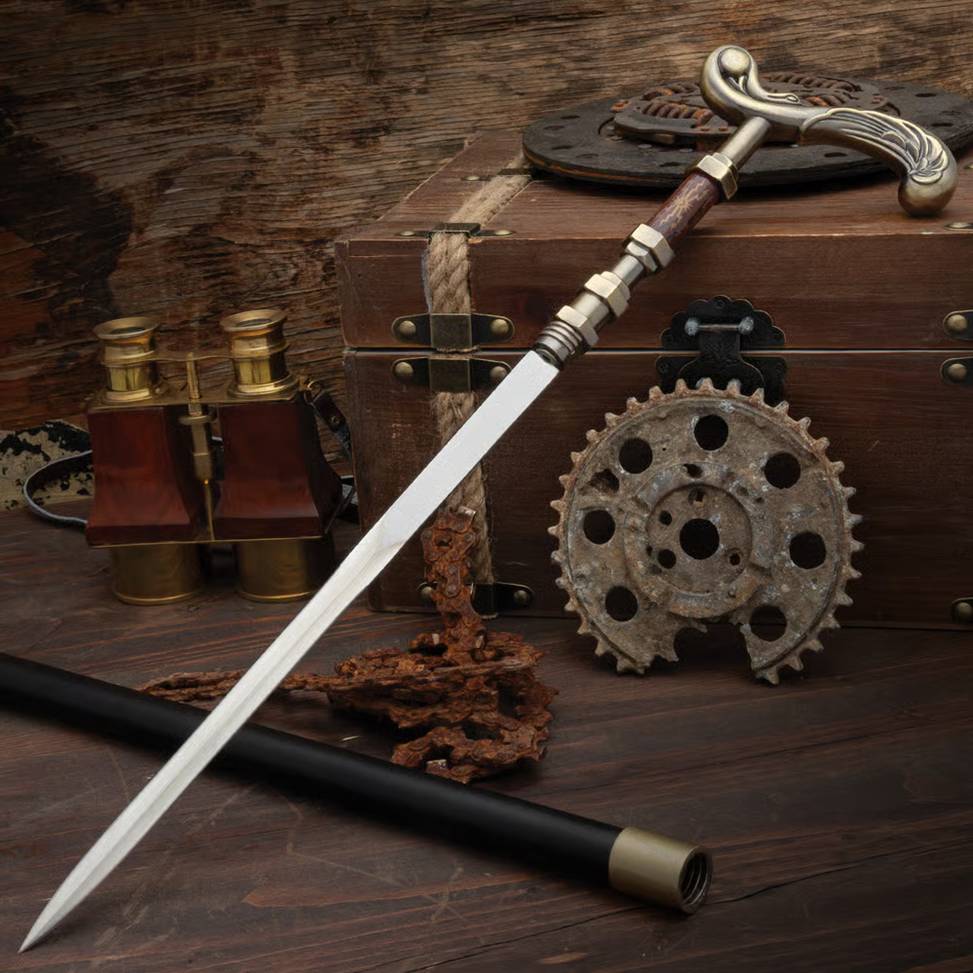
Among the many unique self defense weapons we carry at BUDK are our sword canes, which are available here in a wide range of lengths and designs. We recognize that you might have questions about these unique canes before you buy, so we rounded up some of the more common questions circulating the internet and answered them in one place.
What is a sword cane?
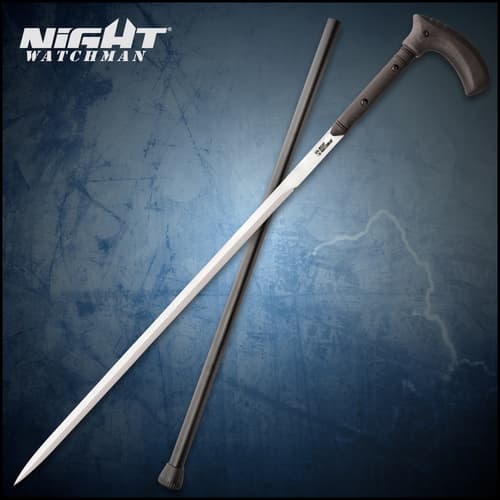
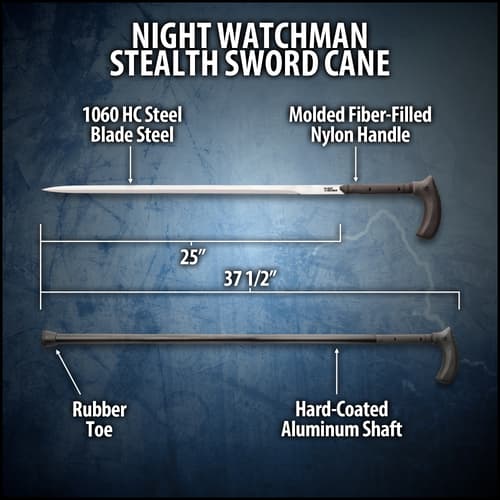
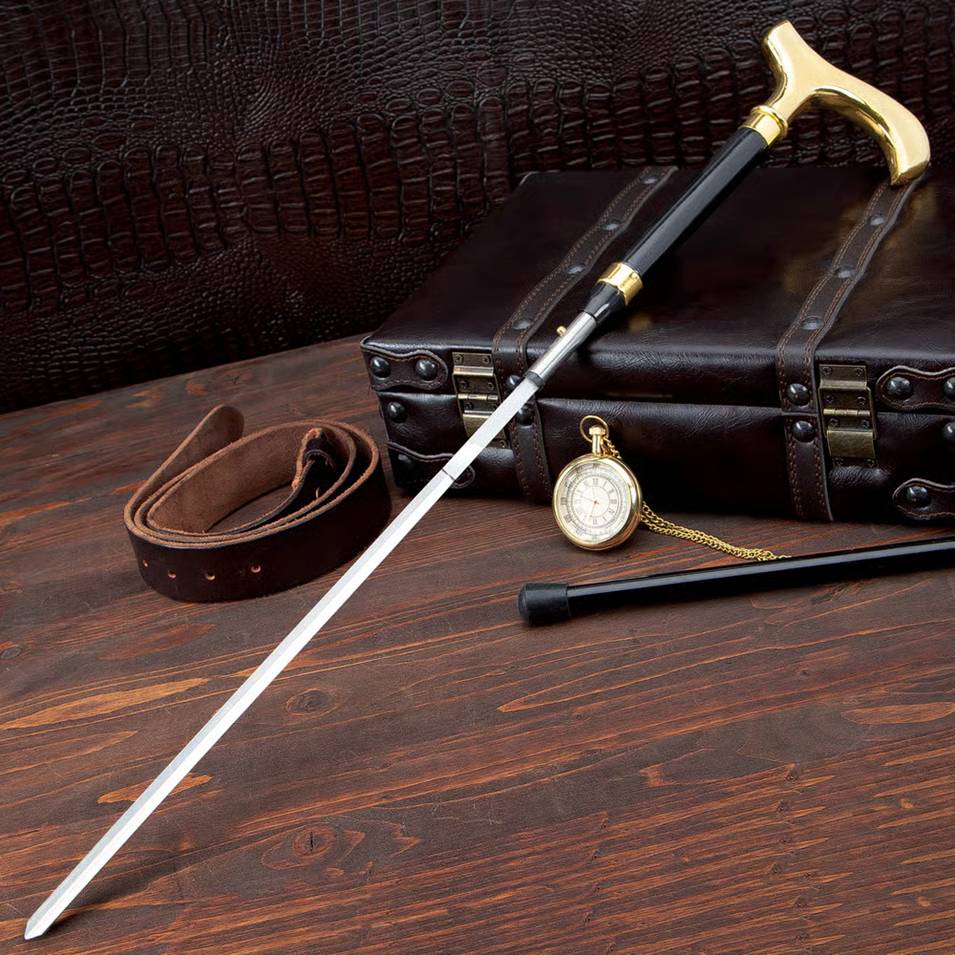
In a nutshell, a sword cane is a cane that’s hollow inside, and which contains a concealed sword blade that is integral with the handle or knob of the cane, which also serves as the hilt of the sword. The shaft of the cane does double duty as the scabbard for the sword. They can be potentially practical self defense weapons as well as collectors’ items, especially since there is such a wide variety out there in terms of styles, materials, and sizes.
Are sword canes legal?
Sword canes are not legal in all jurisdictions and we cannot provide legal advice. If you have concerns about purchase or possession where you live, consult a lawyer before buying one.
It is also the case that more metal is left in the stock of the blade between where the spine and where the grind starts. That makes a Scandi grind particularly robust. Because there is no secondary bevel, you can lay the flat of the grind directly against the stone to sharpen the edge, without taking into account the angle of the secondary bevel (because there is none). The chief advantage of the Scandi grind is in the strength, but the drawback is that Scandi grinds don’t slice as efficiently as full-flat grinds or some other types of grinds.
What features should I look for in a sword cane?
As with other swords, you should look for a design that has a full tang. If a sword cane has what’s known as a rat-tail tang, it will not be able to withstand the stresses of actual use and is good for little more than a conversation piece or a display item. You should also look for a sword cane with a blade made from a suitable steel alloy; high-carbon alloys are best, and the sword blade must have a proper temper. If the blade is not appropriately tempered, it will bend or snap if it is ever subjected to the rigors of actual use. Other than that, what’s best in a sword cane is whatever aligns with whatever your preferences are.
Is a sword cane legit as a self defense weapon?
Potentially, yes, but that depends on what you need. A sword cane, like a knife, can serve as a self defense weapon and in this case it will offer better discretion and superior reach and range. The cane itself can also be used as a non-lethal deterrent as a striking implement.
Are there better self defense weapons?
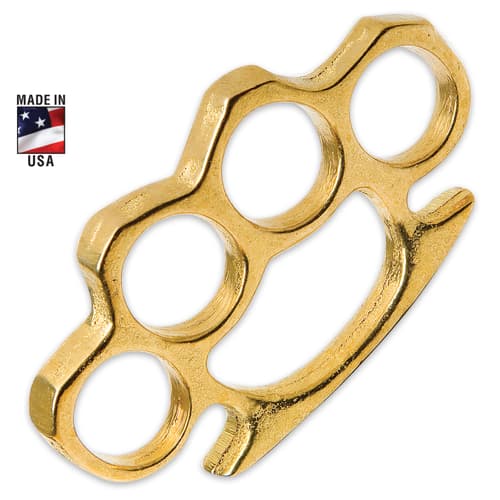
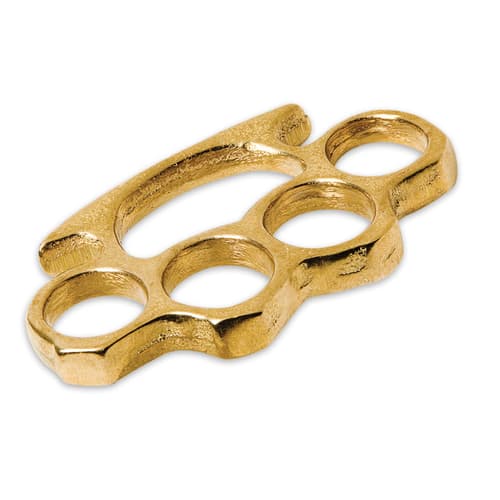
If you are looking for something non-lethal, then there are definitely better self defense weapons. For instance, stun guns and brass knuckles are generally more effective at incapacitating assailants without the need to use deadly force, as are mace and pepper spray.
How do I care for a sword cane?
The basic notes for caring for a sword cane are the same as they are for caring for any real sword. If you use the sword cane for live cutting practice, always, always clean and dry the blade before you store it. Leaving anything on the blade, especially moisture, will cause rust in short order, and can even damage highly stainless alloys. If you cut acidic foods like fruits when practicing, be extra careful about cleaning and drying the blade, as acid can stain a non-stainless steel very quickly. In these instances it’s best to wipe the blade clean after every stroke. Also, make sure you occasionally oil the blade along with any exposed metal fittings. Even a stainless steel alloy can rust or pit if it is not protected. A single drop of oil wiped evenly over both sides of the blade can go a long way towards protecting it.
In addition to keeping to these high-level notes for sword cane maintenance, here are some other tips for responsible ownership and care:
Otherwise, the notes for caring for a sword cane are effectively the same as caring for any other sword, knife or edged tool.
Do I need to know anything special about how to store a sword cane?
Yes, the same notes that go for storing other swords apply to sword canes. They should primarily be protected against chronic high humidity, as this will either cause or accelerate corrosion on the blade. Also, if your sword cane features a blade made of a non–stainless steel alloy, such as 1095 (though there are many others) you should actually not store the blade in the cane (that is, sheathed) for a prolonged period of time because that can actually trap moisture next to the blade and potentially cause the blade to rust.
Are sword canes stainless?
That depends on the steel alloy used to make the sword cane. The description should let you know if a blade is stainless or not but you can also call us if you have questions about a specific model before you buy.
What’s the right length of cane for me?
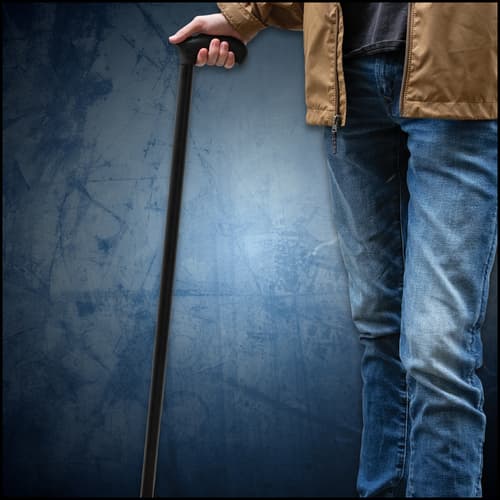
That depends on how tall you are, but one length of sword cane can also accommodate more than one height. As a general rule, the knob of the cane should come up to about hip level or a little higher when you are standing upright, with the tip of the cane on the ground.
Are both the cane and the sword functional?
In high quality sword canes, both the sword blade and the cane are functional; if it is battle ready, the blade can be used for live cutting practice and training, and the cane should be able to function as a walking stick as well, making these highly versatile and practical tools.
Don’t See Your Question About Sword Canes Answered Here?
You can learn more about our collection of sword canes at the previous link, but if you still have questions after reading on our website, or didn’t see your question answered here, feel free to get in touch with us directly and we will help you out before you commit to one or the other.