A Fixed Blade Knife Buying Guide
A Fixed Blade Knife Buying Guide
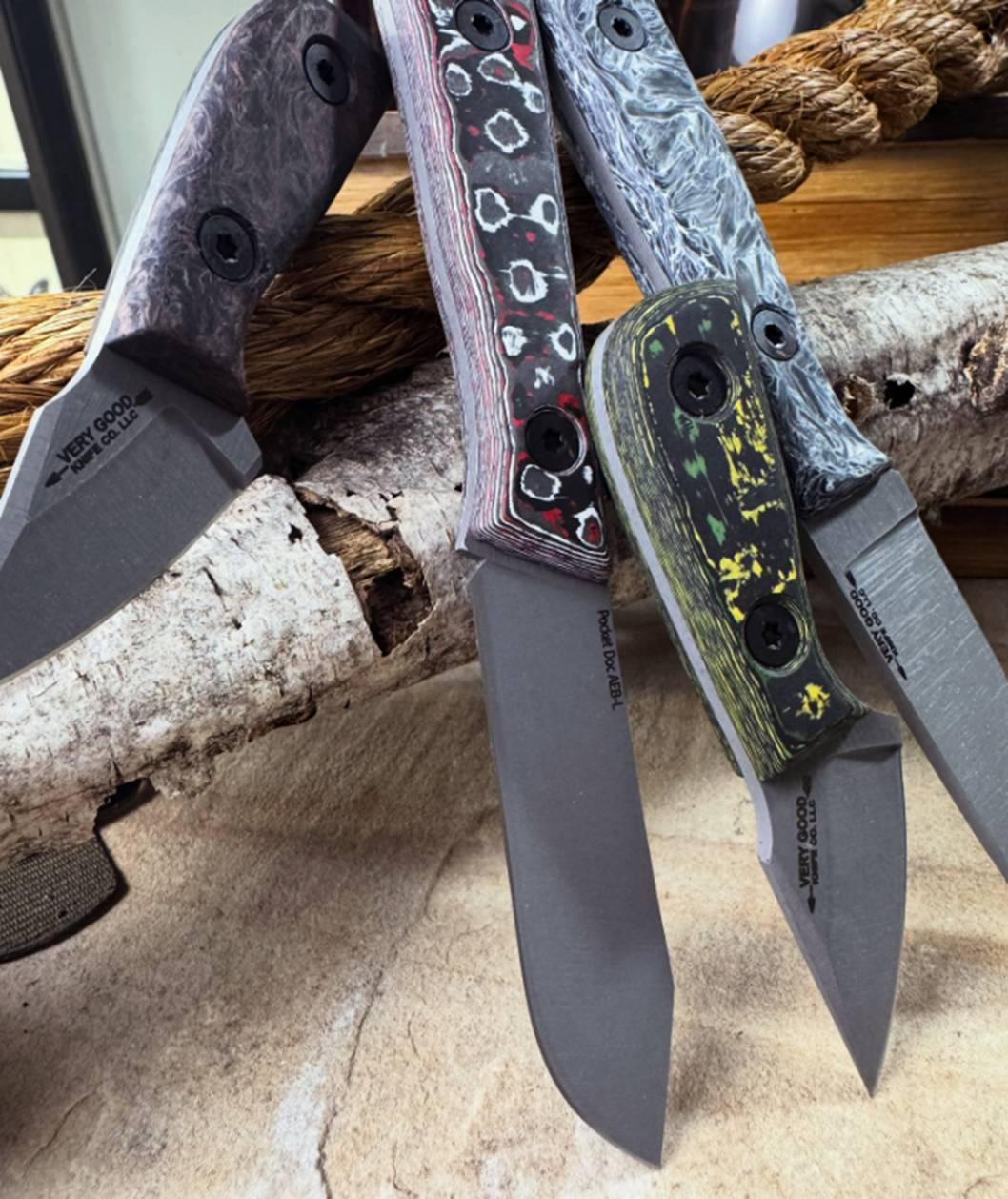
You can get a cheap fixed blade knife for a few dollars, or you can buy right the first time. The thing is, quality fixed blade knives for hunting, camping, survival, bushcraft and other pursuits can be quite expensive. You should know what you’re looking for out of the gate so you get the right knife for your intended application the first time around. This short guide should help with that.
Intended Purpose
First, you should answer some questions about what you’ll be using the knife for in the first place. Here are some common applications for fixed blade knives:
- Hunting; skinning, caping, boning, fileting.
- Fishing; cutting bait and line, fileting or pan-dressing fish
- Survival and camping; constructing shelter, clearing brush, carving camp furniture and tools, firecraft.
- Bushcraft; many of the same uses as above.
- Defensive applications; for use as a sidearm or a backup.
- Utility; repairing electrical lines, cutting synthetic materials to size and shape, etc.
These are just a few of the things that people carry fixed blade knives for, but it is a good place to start.
Size and Weight
Size and weight are two of the primary determinants of the fitness of a fixed blade knife for your intended application. How much weight you can afford to fit into your loadout will determine how large of a knife you can and should carry. Size will also impact what the knife can be used for. A larger knife with a heavier blade will be better for clearing and chopping, whereas a smaller knife will handle better for carving and detail work.
Blade Profile
Blade profile is one of the most important things to consider before you purchase a fixed blade knife. Some common profiles are:
- Drop point and straight back: Both good for general purpose applications.
- Clip point: Has a finer point for detail work.
- Spear point: Has a stout and bilaterally symmetrical point, good for bushcraft and survival.
- Skinner profile: Has a relatively blunt point but is good for making sweeping cuts.
- Needle point: Good for piercing actions but has a relatively fragile point.
- Wharncliffe and sheepsfoot: A relatively oblique point is strong, making these knives good for hard use where a fine point is not necessarily required.
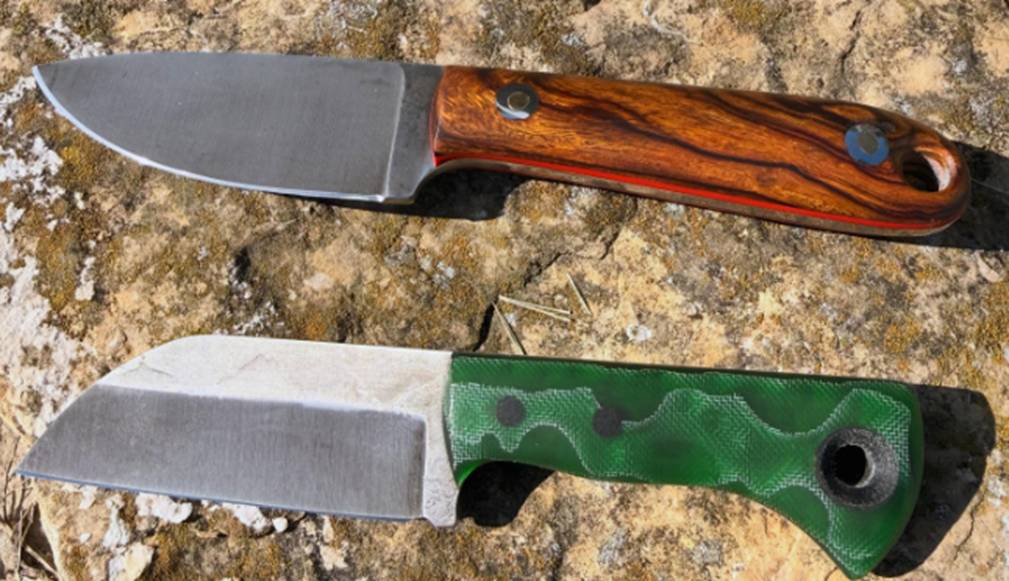
These are only a few of the more common blade profiles out there. For more information on knife blade profiles, their intended applications, and their relative strengths and weaknesses, see our previous post, A Quick Reference to Knife Blade Profiles (Knife Blade Shapes)
Blade Grind
The blade grind is also important to consider here; we will cover four of the more common blade grinds:
- Hollow ground: A hollow ground blade has a grind that is concave. This results in a very, very fine edge that is relatively fragile, but which is also easy to keep sharp. Hollow ground blades make good hunting knives because they are sharp and good for working with meat. However, the fragile edge and tendency to bind in wood makes them somewhat less than ideal as camp or survival knives.
- Full flat: A full flat grind is an excellent grind for most general-purpose applications and is easy to keep sharp in the field. Also a true full-flat grind is not likely to bind in any material you’re working with.
- Half flat (AKA Scandi): A half-flat grind, also known as a Scandi grind, is a flat grind, but only extends halfway (or partway) up the blade. They are also relatively easy to keep sharp and offer a fairly stout edge.
- Axe (AKA convex ground): An axe grind is the opposite of a hollow grind, and results in a somewhat more oblique edge that is much more robust than a hollow grind. These edges are good on camp knives and hatchets, because they result in a very strong edge that resists rolling and chipping. They can be a bit hard to keep properly sharp, though.
Scale Material
Scale material is also something you should consider in a fixed blade knife before you buy. Natural materials may look pretty, but they are also harder to care for and can deteriorate if you do fail to properly maintain them. Synthetic scale materials, such as FRN, GFN, G10, Micarta, carbon fiber, and alloys such as brass, copper, stainless steel, anodized aluminum and titanium, are much more durable and will require less maintenance, so that’s something to keep in mind as well.
Sheath Material
Some fixed blade knives are issued with leather or soft nylon sheaths. These may be more comfortable, but thermoplastic knife sheaths, like Kydex, generally offer a better friction fit along with more versatility with respect to how the knife is carried. A Kydex knife sheath, for instance, may be rigged for scout carry, pack carry, or cross-draw, among others, giving you a lot more flexibility.
Price Range
You’ll also want to consider how much you are willing to spend on a new fixed blade knife, as your budget will determine what you can get, irrespective of the features mentioned here.
Other Features
You may also want to ask questions such as the following before purchasing a fixed blade knife:
- Is there a crossguard to protect my fingers?
- Is there a choil or thumb ramp to improve indexing?
- Is there jimping that improves control?
- Are there features in the scales that improve utility, such as a bow drill divot?
- Is there an exposed tang and if so can I attach a lanyard through it?
- Do I need a fixed blade knife with either a serrated or partially serrated edge?
These are just a few of the questions that you might want to answer before buying but they are a good place to start nonetheless.
Your Next Fixed Blade Knife Is Waiting for You Here
Hopefully this short guide was useful to you and you can use it to help guide you through your purchase of a new fixed blade knife, but we are always here to help. If you have questions or are not sure what you should get, contact us and we will be more than happy to assist.