How to Rake a Lock with a Lock Pick Set
How to Rake a Lock with a Lock Pick Set

Single pin picking might be one of the most effective ways to pick a lock that has pin cylinders, and if you master it you’ll be able to get into most if not any lock that uses this construction, but it takes a lot of time to learn, can be very frustrating, and requires enormous patience and attention.
That being said, raking, a technique that also uses the components on most basic lock pick sets, is far, far faster, far more accessible to most, much more amenable to beginners, and requires much less knowledge of how locks were and what tools to choose. In fact, with a little practice and a good lock pick set, even most novices can rake basic locks in a matter of minutes if not less, even with no former experience doing so. Let’s break down this technique and get into how it works.
Rake Lock Picking: How It Works and How to Do It
In pin tumbler locks, there is a cylinder with a series of set pairs of pins. One side of the pairs of pins is held under tension by springs. When a key with the right teeth is inserted into the lock, it displaces the bottom (or top) pair of pins just right so that the pins align with the shear line of the cylinder, and the cylinder can be rotated in the lock housing, allowing the lock to open. Rake picking is a technique that applies two tools, a tensioner wrench and a lock pick rake, also referred to simply as a rake. The tensioner is used to apply tension to the cylinder so that any pins that are properly aligned with the shear line stay in place rather than falling back into their slots. As for the rake, that is a component in the lock pick set that is used to actually manipulate the pins themselves.
Whereas a hook is usually used for single pin picking (a technique that will not be covered here), a rake usually has several bumps that are used to manipulate more than one pin at once. To use a lock pick rake, first, the tension wrench is applied very lightly so that the pins bind in the cylinder, then the lock pick rake is inserted into the keyway. The rake’s bumps are there to displace the pins under tension so that they align with the shear line of the cylinder so that the lock can be rotated freely. But whereas a single pin hook is used to manipulate each pin individually, a rake is used to try to “guess” how deeply the pins should be displaced, which in most instances makes it a relatively quick and easy way to pick a lock.
In other words, the rake engages multiple shear pins simultaneously in an effort to get them to the shear line more quickly than could be done though single pin picking, although it is the case that raking involves less precision than single pin picking. With the rake inserted into the keyway and the tensioner applying light tension to the cylinder, the rake can be pushed all the way to the back of the keyway. Sometimes the lock will disengage on this first attempt; if it doesn’t, draw the rake back out slowly to see if it engages the pins properly that way.
If that fails, the rake can be “scrubbed” along the pins relatively rapidly. Scrubbing the rake back and forth in the keyway sometimes does the trick of aligning the pins so that the cylinder can be rotated freely and the lock can be opened. If this doesn’t work after a few attempts, remove the rake, reset the tensioner, and try the technique again. Sometimes a lock opens pretty easily after the first attempt to rake it, sometimes it takes a few tries.
One raking technique is called “rocking” in which you scrub the rake over the pins, but you do so while applying a slight upward or downward tension, in an attempt to get the pins to the shear line. Try this technique if straight scrubbing does not work. Also, your lock pick set likely comes with more than one type of rake. If this is the case, try more than one rake if your first attempt fails. In many cases, you will be able to get most basic pin tumbler locks open with one of the raking techniques used here, although raking is not always effective on high security locks.
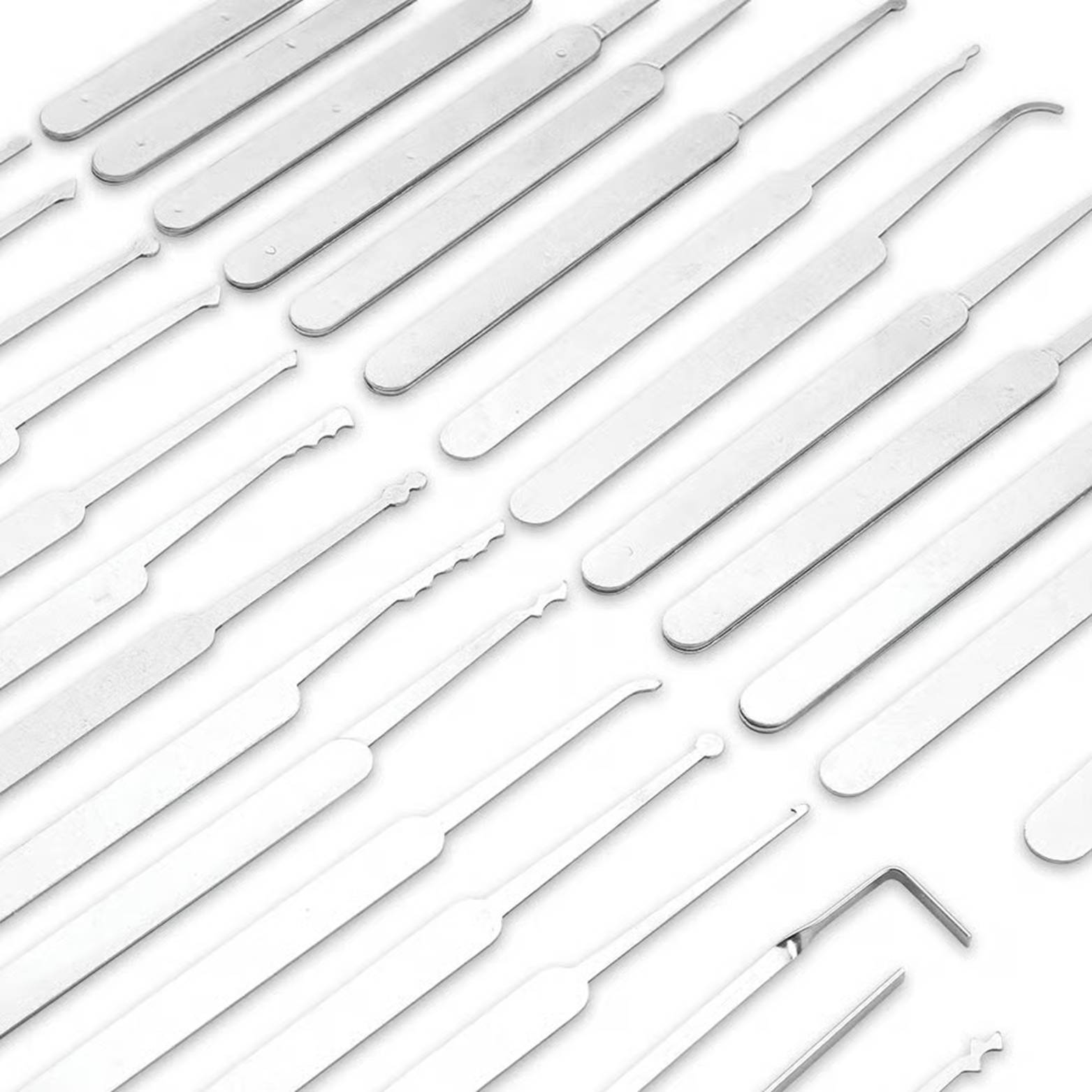
Get a New Lock Pick Set Here
Want to try lock picking out for yourself? You can shop our collection which contains lock pick sets and get in touch with us if you have any questions about how to use them. We are more than happy to help.