Rapiers vs. Sabers: Exploring Two Different Sword Patterns
Rapiers vs. Sabers: Exploring Two Different Sword Patterns
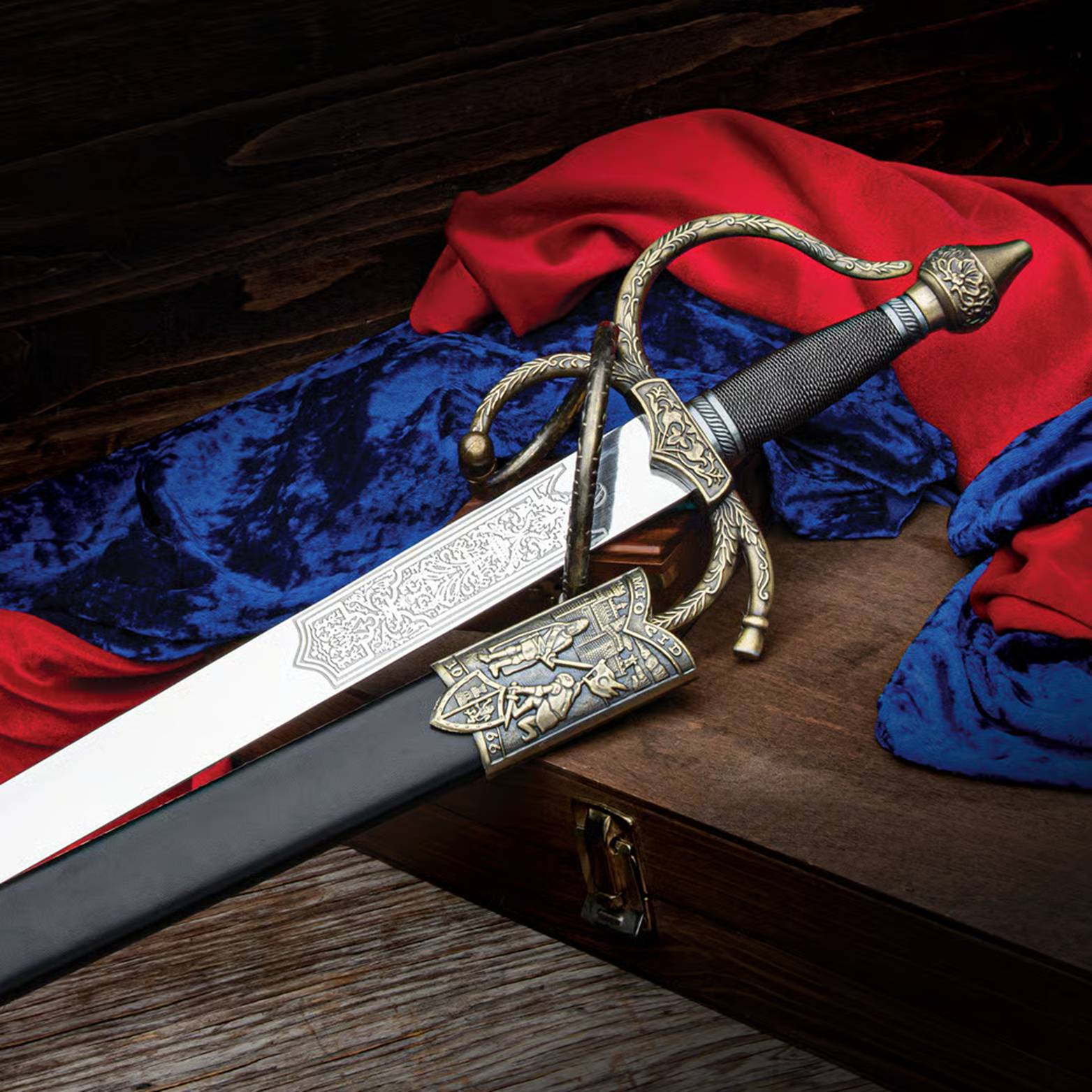
Two common sword patterns often encountered in collections are rapiers and sabers. Though there is more than one type of rapier and more than one type of saber, each broad category is easy enough to define to show the disparities between the two. So let’s take a closer look.
Rapiers
The term “rapier”, adapted from “espada ropera” or “dress sword”, is a sword pattern that was common in civilian use in Europe from the 1500s to the 1700s. There are many different types of rapiers, but the general pattern is a sword with a long, thin, but rigid blade, with a very fine point. The hilt of a rapier would either be a swept hilt or some species of ring or cup hilt, with plenty of protection for the wielder’s hand. The hilt’s mass also helped to shift the center of gravity down towards the base of the blade, which made it very hilt-heavy, which afforded very good control over the point.
This was essential as, despite the fact that a rapier might have had a sharpened edge (or edges) the blade of a rapier would be very light and really only well-adapted for thrusting and lunging. Some rapiers would not have either edge sharpened, and were reliant entirely on the point for thrusting attacks. While rapiers were well adapted to some dueling disciplines, the swords themselves were often elegantly decorated and worn as status symbols by those with means. The design and nature of a rapier were, however, at odds with most saber patterns.
Sabers
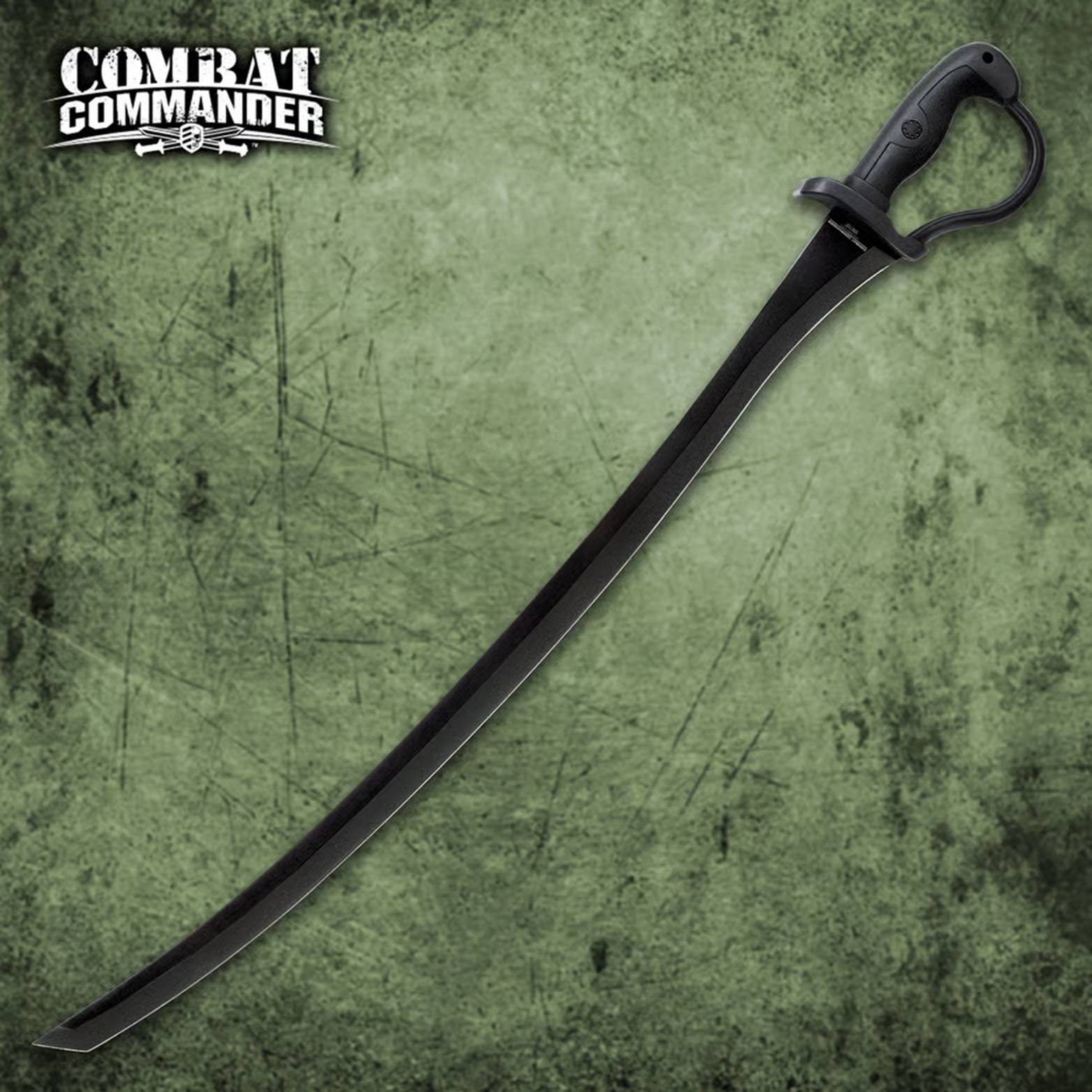
Whereas the rapier was mostly adopted by civilians, the basic saber pattern is more closely associated with military ascriptions. Apparently, whereas the origin of a rapier’s name is Spanish, the word saber derives from the Hungarian word szablya, which meant “to cut”. And, whereas the rapier was better designed for thrusting, saber patterns are better adapted at slashing attacks. The basic saber was a single-edged sword with a relatively long blade that had a slight curve to it. It was often carried by cavalrymen and used as a slashing weapon while on horseback. The saber may have had a small length of sharpened edge along the back of the spine near the point, easing its efficacy for backhanded attacks or for thrusting. Otherwise it would have only one edge.
Whereas rapiers had long, thin, stiff blades with fine points, the emphasis of a saber was on its curved single edge. The blade of a saber is often flatter and broader as well, with more mass, which made it more effective as a slashing weapon. While sabers could also be used for thrusting, the curve of the blade and more oblique tip made them more effective for slashing. Also, the center of a saber’s mass would be located farther forward on the blade, making them less nimble in the hand.
This feature aided in slashing, but made it harder to control the point of the sword, unlike a rapier, in which the wielder could exhibit much finer, more precise control over the point. Like a rapier, a saber would often have an enclosed hilt. Typically a rapier would have a much more ornate hilt, but a saber could also have a basket or cup hilt. More commonly, a saber would have a simple D-guard style hilt protecting the wielder’s hand.
What Makes a Battle-Ready Sword (Rapier, Saber or Otherwise)
For those of you that landed here looking for a “real” sword, one of the terms we use in this industry is “battle ready” which means that the sword can be used for live training or cutting practice. Fortunately, the features that qualify a battle-ready sword are not pattern dependent. Therefore if a sword has these three attributes it can be considered battle ready whether it is a rapier, a saber, or a claymore.
First, the sword must be made with an appropriate steel alloy. Second, it must be tempered appropriately so that the blade will not bend when stressed, but also so that it will not shatter or chip when struck. Lastly, the sword must have full-tang construction, with a tang that is integral with the blade stock, not welding to it or threaded onto it. One-piece, full tang construction is critical to the strength of a sword. If the sword has all three of these attributes, no exceptions, it can be considered a battle-ready sword that can be used for live cutting practice.
Shop Battle Ready Swords Here
In the market for a new rapier for your collection, or for a saber that you can actually use for live cutting practice? Shop our collection of battle ready swords and if you have any questions about any of our patterns or the specifications of a model, get in touch with us directly.